Surgical vs Non-Surgical Spinal Decompression Treatment

There are a variety of treatment options available for chronic neck and back pain caused by spinal disorders. Today, we will compare in detail the 2 types of spinal decompression treatment: Surgical vs Non-Surgical Spinal Decompression Treatment. Let’s begin!

What Is Non-Surgical Spinal Decompression Therapy?

Non-Surgical Spinal Decompression Therapy/Treatment is a non-invasive treatment based on the USA Patented Spinal Decompression Technology. It offers neck & back pain relief at a fraction of the surgery cost.

The treatment lasts for a few weeks to a maximum of two months, with several treatment sessions of around 45-60 minutes scheduled during that time. The spine specialist will keep monitoring your progress to determine the extent of the treatment required.

How Does Non-Surgical Spinal Decompression Therapy Work?

The non-surgical spinal decompression therapy involves decreasing pressure on the spine by stretching & releasing the spine and separating the joints & bones in the back along with the discs. Spinal decompression treatment helps change the disc material position and retract it, thus decreasing pain & facilitating healing.

What Does It Do for the Spine & Overall Health?

Spinal Decompression Treatment alleviates the pressure on the spine, providing significant pain relief in a short period of time. It promotes enhanced circulation of water, oxygen & nutrients in the spine, facilitating healing in the spinal discs as they start to rehydrate in addition to ensuring excellent spine function.

After treatment, patients can live a pain-free everyday life, thus enhancing their physical as well as mental health in the process.

What Is Surgical Spinal Decompression Therapy?

Surgical Spinal Decompression Therapy is in complete contrast to its non-surgical version. It’s an invasive procedure, has a large number of side effects & risks involved and comprises a prolonged recovery time of weeks to months. As a result, this treatment is not recommended for patients suffering from spinal disorders.

How Does Surgical Spinal Decompression Therapy Work?

As per the working, surgical spinal decompression therapy can be divided into 3 types:-

  • Spinal Fusion: Two or more vertebras are joined together to promote stabilisation of the spine.
  • Discectomy: Damaged discs are taken out from the body to decrease pain.
  • Laminectomy: A tiny portion of the bone in the vertebra is taken out from the body, helping decrease pressure by enhancing the spinal canal size.

Risks Of Surgical Spinal Decompression Treatment

Following are some of the spine surgery risks and potential complications:

Infection

Infection in the region where the incision is made is a well-known risk linked with any kind of surgery, let alone surgical spinal decompression treatment. The probability of infection is higher in patients who are diabetic or utilise steroids.

Blood clots

Blood clots are also a common surgery-related risk which may cause pain & swelling in the region where blood clots are formed after surgery. The surgeon may implement certain preventive measures to avoid the formation of blood clots.

Leakage of cerebrospinal fluid

At the time of surgery, accidental damage could be caused to a spinal nerve’s lining, causing leakage of cerebrospinal fluid. If not repaired during surgery, it may lead to headaches & wounds near the spine region.

Dural tear

Dura is a watertight sac of tissue which surrounds the spinal nerves & spinal cord. If there is a tear in this tissue and it isn’t detected & repaired during the surgery, then it can result in cerebrospinal fluid leakage after the operation.

Facial sores & loss of vision

A marginally puffed-up face is a possibility after surgery, which can culminate in the emergence of red facial sores on the chin/forehead lasting for many days.

Nerve injury & paralysis

Additional risks associated with surgical spinal decompression treatment are nerve injury & paralysis. Nerve injuries could be caused due to leaking of spinal fluid, bleeding and accidental damage to blood vessels or nerves during surgery. Patients may also experience numbness or weakness in body parts surrounding the spine region. Having said that, paralysis is a rare occurrence.

Death

Death due to excessive bleeding, a blood clot or a negative reaction to an anaesthetic is also possible during surgery, although it’s quite rare.

Why Is Non-Surgical Spinal Decompression Better Than Surgical Spinal Decompression?

As you may have realised by now, surgical spinal decompression treatment involves a tremendous amount of risks and side effects along with a prolonged recovery process. On the other hand, the non-surgical spinal decompression treatment has several advantages, such as:

  • 100% Non-Surgical Treatment at a Fraction of Surgery Cost
  • Greater than 85% Success Rate, Lifelong Relief
  • No Medication, Injections or Hospitalisation is Required
  • Completely Painless with Zero Side Effects
  • Proven & Patented Technology Since 1994
  • Very Effective as per the USA Journal of Clinical Research

Conclusion

When it comes to resolving neck or back pain caused by a spinal disorder, the Non-Surgical Spinal Decompression Treatment is the finest treatment available for lifelong pain relief. If you or your family member has been diagnosed with a spinal disorder, then look no further than the Non-Surgical Spinal Decompression Treatment! Contact us on the following number to book a consultation with our Spine Specialist at your nearest ANSSI Wellness Centre: 9004726844

FAQs

Yes, non-surgical spinal decompression treatment has a success rate of more than 85% and provides lifelong relief from neck or back pain.

Yes, it’s beneficial to decompress the spine as it facilitates the improved circulation of oxygen, water & nutrients in the spine. It also promotes healing in the spinal discs and helps ensure good spine function.

Reference:

Gionis, Thomas A., and Eric Groteke. “Spinal decompression.” Orthopedic technology review 5 (2003): 36-39. https://comfortrac.net/wp-content/uploads/2015/11/Spinal_Decompression.pdf

Daniel, Dwain M. “Non-surgical spinal decompression therapy: does the scientific literature support efficacy claims made in the advertising media?.” Chiropractic & Osteopathy 15.1 (2007): 1-5. https://chiromt.biomedcentral.com/articles/10.1186/1746-1340-15-7

Share

Cervical Spine – Anatomy, Diseases and Treatments

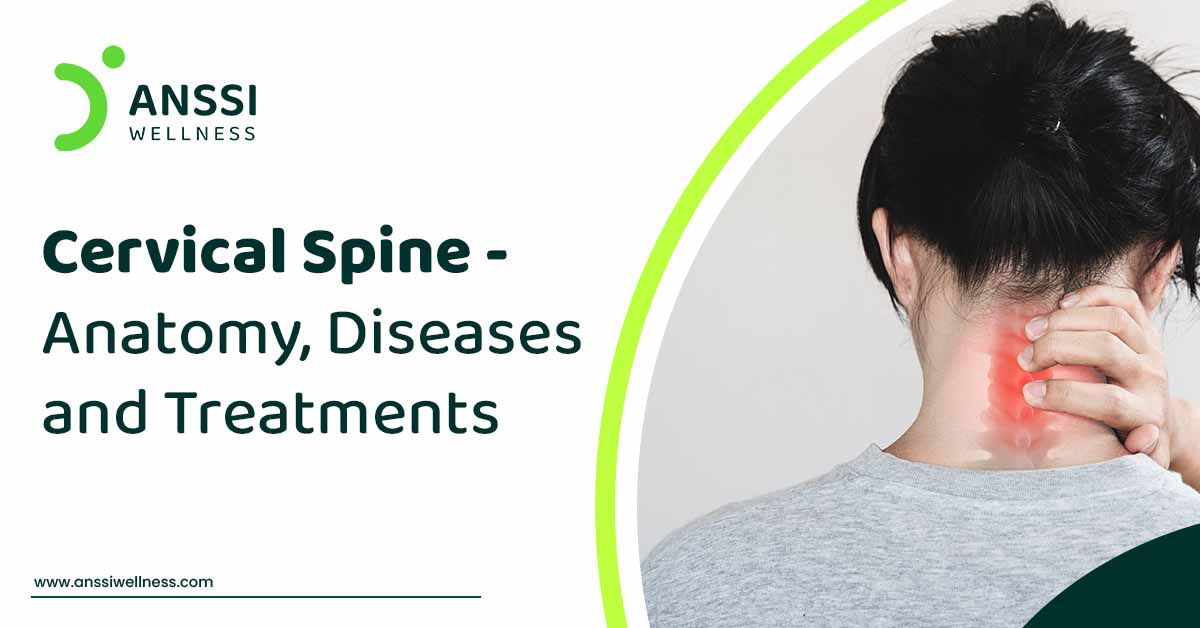
The cervical spine gives support for the weight of the head and surrounds & safeguards the spinal cord, facilitating a variety of head movements. Through this blog, we will provide a comprehensive overview of the cervical spine including what is the cervical spine, cervical spine diseases and cervical spine disease treatment.

What is the cervical spine?

The cervical spine basically comprises the neck region of the spine and includes the 7 bones named C1-C7 vertebrae. These vertebrae are isolated from each other by the intervertebral discs, which enable the spine to move readily. They play the role of shock absorbers during movement.

What does the cervical spine do?

The cervical spine conducts various functions such as:

Protecting your spinal cord

The spinal cord nerves navigate a big hole which traverses the centre of all the vertebrae, from the cervical vertebrae, going through the middle back vertebrae and ending between the 1st & 2nd lower back vertebrae. As a whole, all the vertebrae of the spine constitute a shielding central canal which protects the spinal cord.

Supporting your head and allowing movement

The cervical spine acts as a fulcrum for the weight of the head and enables the head & neck to lean in a forward motion, backward motion, side-to-side turning motion or motion that includes tilting to a particular side.

Providing a safe passageway for vertebral arteries

The tiny holes present in the C1-C6 cervical spine vertebrae offer a safe passage for vertebral arteries to transport blood to the brain. This area is the sole vertebrae section in the whole spine that comprises holes in the bone to enable arteries to travel across.

What diseases and disorders affect your cervical spine?

Following are the various disorders that can affect the cervical spine:

Cervical radiculopathy

Comprising symptoms such as numbness, weakness, tingling & pain, this condition occurs in the situation when a cervical nerve gets pinched by cervical vertebrae. The symptoms could stay within the spine region or may spread to the whole arm, hand & fingers.

Neck pain

A common condition that may arise due to a variety of different reasons, neck pain related to the spine could be caused by degenerative conditions like spinal stenosis, herniated disk, osteoarthritis, or a pinched nerve.

Other conditions that may cause neck pain comprise incorrect posture, rheumatoid arthritis, physical strain, mental stress, meningitis, growths of tumors, cysts or bone spurs & cancer.

Cervical degenerative disk disease

This condition arises when the disks constituting the cervical spine wear down.

Herniated disk

A herniated disk is basically a leak/tear to the disks that supply a cushion between vertebrae.

Bone spurs in your cervical spine

Growths that happen on any of the 7 vertebrae in the cervical spine are called bone spurs.

Cervical spondylosis

Also referred to as neck arthritis, cervical spondylosis is an age-linked condition wherein gradual degeneration of the disks & joints in the cervical spine occurs.

Cervical spinal cord injury

When an injury occurs to the cervical vertebrae, it’s called a cervical spinal cord injury. The majority of these injuries are caused by an abrupt, painful blow to the vertebrae.

Cervical spinal fracture

Cervical spine fractures can be caused due to a wide array of reasons. This includes compression (generally due to mild trauma in an individual with osteoporosis) or fracture-dislocation (usually caused by vehicle accidents or falls from steep heights), or a burst fracture (vertebra smashed in all directions).

Cervical spinal cord compression

This condition comprises pressure on the spinal cord in the cervical region of the spine. It’s generally caused due to osteoarthritis (wear & tear on the spine’s bones).

Cervical stenosis

Cervical stenosis is usually a result of ageing and happens when the spinal canal gets narrowed and compresses the spinal cord. It results in the shrinking of space between vertebrae and the discs relinquishing their shock absorption capacity.

Cervical spinal tumour and cancer

Cervical spinal tumours can be benign or cancerous and are essentially abnormal tissue growth inside the spinal column.

How are cervical spine health issues treated?

Depending on the severity of the cervical spine health issue, it can be treated via non-surgical treatment options such as Spinal Decompression Treatment, medications, injections, physical therapy combined with bed rest, etc., or surgery.

Spinal Decompression Treatment for spine health issues

The Non-Surgical Spinal Decompression Treatment is a USA Patented Technology made available in India by ANSSI Wellness Centre. This state-of-the-art technology helps treat a variety of spinal disorders without any surgery.

The treatment has a greater than 85% success rate and provides lifelong pain relief at a fraction of the surgery expenses!

ANSSI has so far successfully treated spinal disorders in 3500+ patients across India, South Africa, Iran, Sri Lanka, Maldives, Tanzania & Canada.

Conclusion

The Spinal Decompression Treatment is the best and highly affordable treatment option for chronic cervical spine issues. If you are suffering from a spine-related disorder, then get in touch with the Spine Specialists at ANSSI Wellness Centre to know more about this treatment.

Share

How to Prevent Neck Pain While Riding a Motorcycle? Tips To Prevent It

Neck pain due to regular motorcycle riding is a common condition experienced by millions of people across the world. This pain is not only limited to the neck region but is also experienced in the upper back, lower back & shoulders. It’s one of the main issues faced by motorcycle riders. Keeping this in mind, we have come up with this insightful blog to share proven tips that can help prevent neck pain caused by motorcycle riding.

Neck Pain While or After Riding a Motorcycle

Motorcycle riding is generally viewed as an enjoyable experience but the accompanying neck pain can prove to be a major nuisance. So what causes this pain? To put it simply, neck pain can be a result of improper riding position, bike configuration, duration of the ride and also stress.

How to Prevent Neck Pain While Riding a Motorcycle

Now that we have had a brief idea about the main reasons behind neck pain, it’s time to get to know the tips & tricks that can help you prevent it. Let’s get started!

Stretch Before And After Riding

Making a habit of stretching before and after a ride can help you avoid potential injuries or soreness. It can help prevent neck, shoulder, upper and lower back pain that can be caused due to regular motorcycle riding for long periods.

Simple stretching exercises such as neck circles, arm swings, forward folds, etc., can boost the flexibility of your muscles & mobility of joints, thus helping prevent injuries.

Adjust Your Posture

When sitting on a motorcycle, rectifying your posture by adjusting your seat height or marginally moving your hands on the handlebars can make a world of difference to your neck pain.

The importance of an excellent posture while riding a motorcycle cannot be emphasised enough with regard to preventing or reducing neck pain. Make sure to sit straight, avoid a slouch and don’t bend the neck region to look down. Instead, try to look around by moving your eyes.

Stay Hydrated

Hydration is another crucial factor to keep in mind when looking to prevent muscle fatigue and the ensuing pain around the neck region. Fluids are essential to lubricate your joints, fuel your muscles and maintain optimal reaction time when riding a motorcycle. Therefore, make it a routine to drink ample water before and after a motorcycle ride.

Motorcycle Riding Posture to Prevent Neck & Other Pain

When it comes to motorcycle riding postures, there are 3 basic postures which can be followed while riding. Each posture has its advantages & disadvantages, and you need to adapt as per your motorcycle design and your body size. Let’s get to know the postures in detail!

Standard Riding Posture

As the name suggests, the standard riding posture comprises a relaxed back position and a neutral neck & shoulder position, with the elbows settled in the grips. Make sure that your forearms and elbows are in a parallel position to the ground and that you are not overreaching your elbows.

This posture is difficult to sustain when your body size is smaller than the motorcycle. In such a case, you will have to lean forward and overreach your elbows while riding, resulting in potential shoulder injuries.

Sport Riding Posture

Featuring a forward lean & forward tilt of the pelvis, the sport riding posture is a cool-looking posture made famous by movie actors and celebrities. Although aesthetically pleasing, this posture can cause considerable trauma to the body, particularly to the lower back region.

If your motorcycle design makes it necessary to ride in the sport riding posture, then ensure that your head is in marginal extension and the muscle at the top of your neck is providing support to the head. Also, your wrists should be primarily neutral and your feet marginally behind the knees.

This will help prevent/decrease neck pain. Moreover, it’s well-advised to avoid maintaining this posture for extended periods of time when riding at high speeds. At low speeds, try to completely avoid this posture if possible.

Cruiser Riding Posture

Similar in a number of ways to standing riding, the cruiser riding posture is the most comfortable posture when riding at low speeds. When followed correctly, this posture comprises the back and head in an upright position, relaxed hips & pelvis and the leg position at around a 90-degree angle.

However, when riding at high speeds, this posture can cause fatigue in the neck & abdominal muscles as forward-leaning will be required to maintain control of the bike.

Conclusion

Following the effective tips & tricks mentioned above can help ensure that your motorcycle riding experience is pleasant with the least amount of pain. In addition, doing yoga exercises regularly can further help decrease this neck pain.

If you have been diagnosed with a spinal disorder due to motorcycle riding, then contact the Spinal Experts at ANSSI Wellness Centre for Expert Guidance and Treatment.

FAQs

Yes, wearing a motorcycle helmet that is heavy or ill-fitting can exert unwanted pressure on the neck and affect your posture while riding. This can cause neck pain.

Share

Scoliosis – Symptoms, Diagnosis and Treatment

Is your school-going child walking with an abnormally hunched back? If yes, then he may have scoliosis – a common spine condition usually found in adolescents. Check out this blog to know about this spine condition in detail about symptoms, diagnosis, and treatment.

What is Scoliosis?

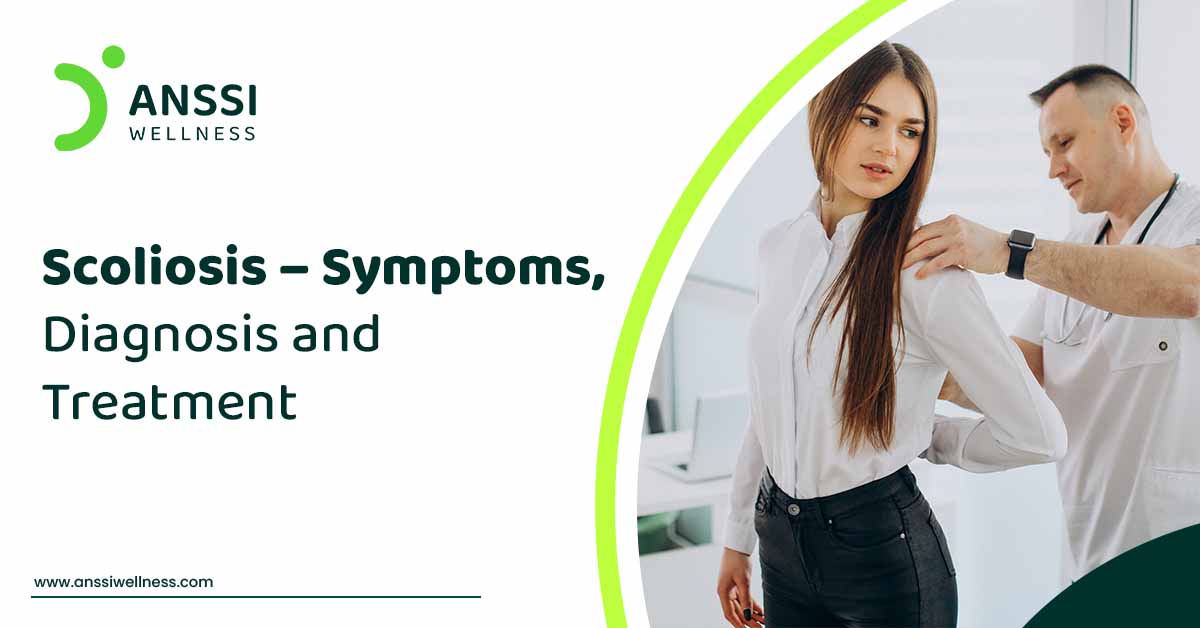
Scoliosis is an abnormal sideways curvature of the spine that resembles the letter C or S. The angle of the curve, when over 10 degrees on an x-ray, is said to be scoliosis. It’s generally diagnosed in young children in their early adolescent years.

Signs and Symptoms of Scoliosis

The various signs & symptoms of scoliosis may include:

  • A visible curve in the back
  • Shoulders in an uneven position
  • One shoulder blade looks bigger than other
  • Uneven waist
  • One hip is higher than the other hip
  • One side of the rib cage bulging forward
  • One side of the back seems bigger when bending forward

Besides visible signs, scoliosis may cause:

  • Lower back pain
  • Stiffness in the back
  • Pain & numbness in the legs
  • Tiredness caused by muscle strain

What are the Common Types of Scoliosis?

The 4 common types of scoliosis include:

Idiopathic Scoliosis

The most common type of scoliosis, Idiopathic Scoliosis doesn’t have a definite cause. As per research, it seems to be genetically inherited in many cases. It’s generally mild in nature and requires no extensive treatment. Also, it’s 8 times more likely to affect girls as compared with boys.

Congenital Scoliosis

Congenital scoliosis is a rare condition that starts taking effect as a newborn baby’s back begins developing before birth. Issues with the small bones in the back known as vertebrae can lead to a curve in the spine. The vertebrae might be incomplete or not properly divided.

Doctors might be able to detect congenital scoliosis at the birth of the child, or it may remain undetected until the child’s early teenage years.

Neuromuscular Scoliosis

Neuromuscular scoliosis is generally a consequence of a disorder such as cerebral palsy, spina bifida, or a spinal cord injury. These disorders can cause muscle damage, making the muscles incapable of supporting the spine in the required manner, resulting in a curved back.

Degenerative Scoliosis

Featuring a sideways curve in the spine, degenerative scoliosis is caused due to age-related wear & tear of the discs and joints of the spine. It’s typically seen in adults and affects the lower back region in most cases.

What Causes Scoliosis?

The primary causes behind the most common scoliosis type (Idiopathic Scoliosis) remain unknown to date, although hereditary factors seem to have an influence. Having said that, these are the known causes behind other types of scoliosis:

  • Specific neuromuscular conditions, like cerebral palsy or muscular dystrophy
  • Birth defects impacting the development of bones of the spine
  • Genetic disorders such as Marfan syndrome & Down syndrome
  • Prior surgery on the chest wall as a baby
  • Spinal injuries/infections
  • Spinal cord abnormalities
  • Tumours

How is Scoliosis Diagnosed?

Scoliosis is diagnosed in the following two ways:

Physical Exam

Most scoliosis cases can be detected through a physical exam. Doctors generally observe the back and look for any spine curvature or uneven shoulders/rib cage/waist while the patient stands still with the arms at the sides and then bends forward on the doctor’s instruction.

Imaging

Doctors may prescribe any of the following imaging tests to get a better overview of the spine:

  • X-Ray
  • MRI Scan
  • CT Scan
  • Bone Scan

A regular x-ray usually helps diagnose scoliosis and the severity of the curve in the spine.

What are the Treatment Options for Scoliosis?

As per the severity of the spinal curvature, the treatments for scoliosis differ. Mild curves in children typically don’t require any treatment, with regular monitoring necessary to check for potential worsening.

In cases where the curve is moderate or severe, the following factors are taken into consideration before deciding on treatment:

  • Bone Maturity: In children whose bones have stopped growing, there is a lesser risk of curve progression
  • Location of Curve: Experts believe thoracic curves have a higher probability of progression compared to curves in other spine regions
  • Sex: Girls have an elevated risk of curve progression compared to boys

After taking into account the above factors, the following treatment options are recommended by doctors:

  • Regular Observation & Monitoring
  • Bracing (Wearing a device around the torso that helps prevent worsening of the curve)
  • Surgery (Complications include bleeding, infection, nerve damage, etc.)

Conclusion

The majority of the cases of scoliosis are mild, with few signs & symptoms to be worried about. However, in severe cases, quick & proper treatment is essential to treat the condition and maintain the quality of life.

If anyone in your friends or family circle has been diagnosed with scoliosis and recommended surgery by a doctor, then make sure to consult the Spine Specialists at ANSSI Wellness Centre for Expert Guidance!

Call on the following number to book a consultation at your nearest ANSSI Wellness Centre: 9004726844

FAQs

Scoliosis causes a sideways curvature of the spine in a person. The curve resembles the shape of the letter C or S.

Most scoliosis cases are mild. Having said that, some curves in the spine may become severe with age.

Some types of scoliosis such as Mild Idiopathic Scoliosis doesn’t worsen with age. However, individuals with curves of over 50 degrees are considered to have worsening symptoms with a rise of 1-2 degrees in the curve every passing year.

Share

Spine Surgery Risks and Potential Complications

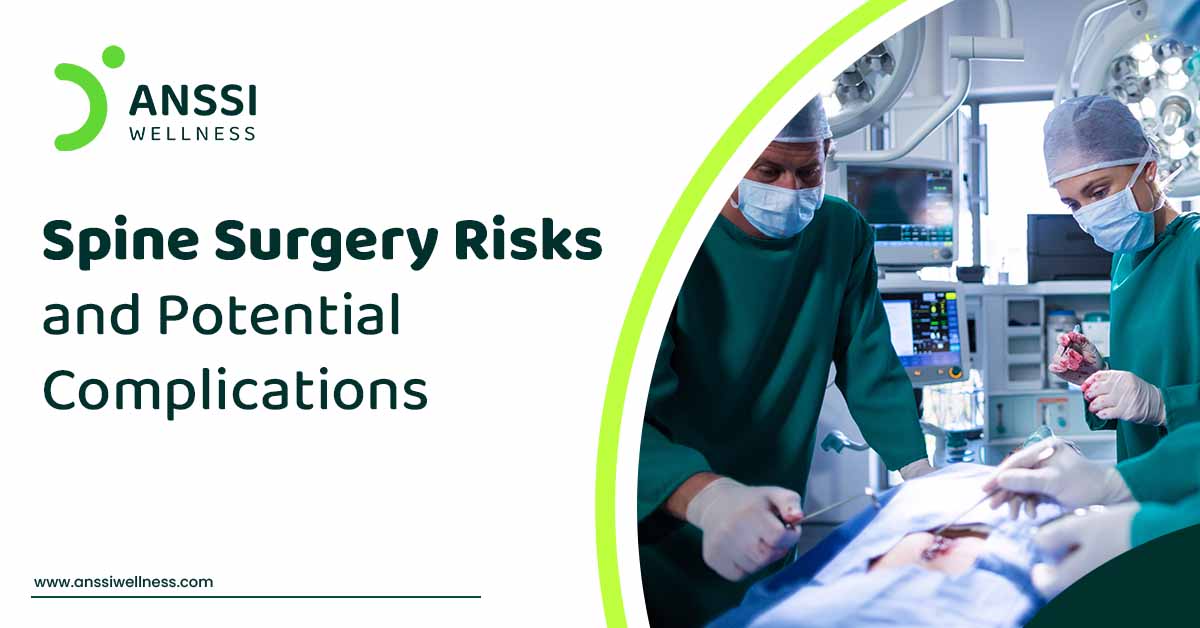
Are you experiencing back or neck pain due to a spine disorder? Has a doctor recommended spine surgery? Read this blog before you make a decision to become aware of the spine surgery risks and spine surgery potential complications that can arise during or after the operation.

What Are The 3 General Categories of Risk with Any Surgery?

There are a variety of risks linked with any kind of surgery, let alone spine surgery. Find below the 3 categories of risks commonly associated with spine surgery.

Risks of Anaesthesia

Almost all spine surgeries necessitate general anaesthesia. Even though all anaesthesia types have some risk involved in them, serious complications & side effects are usually not caused by anaesthesia. The risks also vary as per each individual’s health, type of anaesthesia used, and the body’s response to it. Generally speaking, the risks of anaesthesia include:

  • Sore throat
  • Throat swelling
  • Harsh voice
  • Allergic reaction to medications
  • Nausea & vomiting post-surgery
  • Damage to the teeth/lips
  • Changes in blood pressure
  • Changes in heart rate or rhythm
  • Complications from the breathing tube
  • Seizures
  • Stroke
  • Heart attack
  • Death – very low risk (1 out of 2 lakh patients)

Risks of Complications that can occur During the Surgery

During spine surgery, there are a few risks of complications that one needs to be aware of. However, it’s important to note that these risks rarely materialise. The risks include:

  • Abnormal bleeding
  • Dural tear & spinal fluid leak
  • Injury to a nerve or spinal cord – low risk (1 out of 5 thousand patients)
  • Injury to anatomical structures near the spine

Risks of Complications that can occur After the Surgery

There are a wide array of risks of complications that can occur post spine surgery. Following are some of the well-known risks:

  • Persistent pain, numbness or weakness
  • Dural tear & spinal fluid leak
  • Infection in the wound
  • Blood clots in the legs (DVT)
  • Implant and fusion complications
  • Medical complications leading to stroke, heart attack, pneumonia or urinary infection

Potential Spine Surgery Complications

Let’s get to know some of the potential spine surgery complications in detail:

Bleeding

A little bit of bleeding during spine surgery is quite normal. Surgeons follow various practices to reduce and control bleeding as much as possible. Having said that, on rare occasions, major blood vessels can get damaged, causing continuous blood loss.

Dural Tear

A dural tear takes place when a part of the protective covering over the spinal cord gets torn, resulting in cerebrospinal fluid leaking out. In some cases, the surgeon is able to detect the tear during the operation and repairs it straightaway. The majority of the dural tears heal on their own, but in rare instances, they may not heal and cause a spinal headache.

Fusion Fails

In the case that a spinal fusion doesn’t heal as expected, the condition is termed a ‘nonunion’. A nonunion generally implies that there is motion between the 2 bones which should have been fused together. This undesirable motion can cause pain that might grow in severity over time.

Infection

Infection after spine surgery is relatively uncommon due to the preventive measures undertaken by surgeons/nurses in the form of antibiotics & sterile procedures to minimise the risk of infection.

Nevertheless, an infection might develop in the skin around the incision area and in rare circumstances, the infection may spread deep into the areas surrounding the spinal cord & vertebrae.

Nerve & Spinal Cord Damage

Modern-age surgical tools have decreased the risk of nerve and spinal cord damage in the form of bruises, cuts, etc. Having said that, the risk remains wherein the damage can occur and lead to pain, paralysis, sexual dysfunction and other sensory & functional symptoms.

How is Non-Surgical Spinal Decompression better than Surgery?

As the name suggests, the Non-Surgical Spinal Decompression is a 100% non-surgical treatment that is completely painless, requires no hospitalisation, medications, or injections, and has zero side effects!

Spinal Decompression is a USA patented technology and helps treat various conditions of back, spine and neck pain in just a few weeks’ time. Moreover, it’s highly affordable, provides lifelong relief and has so far helped avoid 3500+ surgeries from India and abroad!!

Conclusion

Taking into account the wide range of risks and potential complications associated with spine surgery, it’s vital to consider alternative treatment methods that can provide relief without such risks.

The Non-Surgical Spinal Decompression Treatment is one such treatment method that has proven to be highly successful, helping treat patients across India, South Africa, Iran, Sri Lanka, Maldives, Tanzania & Canada for spinal disorders without any surgery at ANSSI Wellness Centre.

Click here to book your appointment at your nearest ANSSI Wellness Centre: 9004726844

FAQs

There are several risks and potential complications associated with spinal surgery. This include risks of anaesthesia, bleeding, dural tear, fusion fails, nerve and spinal cord damage, etc.

Any kind of surgery can lead to complications, and the same is the case for spine surgery as well. The risks of spine surgery may vary depending on the spinal disorder you are suffering from.

In order to avoid the various different risks and potential complications linked with back surgery, it’s essential to look for alternative treatment methods.

Share

How to Relieve Back Pain Without Surgery: 5 Non-Surgical Ways To Treat Back Pain

Back pain is a common issue faced by most people due to various different reasons. Research suggests that 8 out of 10 people have to go through some kind of back pain during their lifetime. However, chronic back pain caused by spinal disorders can be a major problem, making it difficult to perform everyday tasks and live a normal life.

In such cases, many doctors recommend surgery to patients, which can be very expensive, full of risks and accompanied by a number of side effects. Hence, it’s important to consider non-surgical ways of treatment to relieve back pain without surgery. Keeping that in mind, we have come up with this highly informative blog on the common causes of chronic back pain and 5 non-surgical ways of treatment. Let’s begin!

Common Causes of Chronic Back Pain

Most of the time, chronic back pain is caused by age-related issues, but it can also be a result of spinal disorders or injury. The common causes of chronic back pain are:

  • Spinal Arthritis
  • Spinal Stenosis
  • Disc Issues, like a herniated/bulging disc
  • Myofascial Pain Syndrome (unknown muscle pain & tenderness)

5 Non-Surgical Ways To Treat Back Pain

Back pain can be treated without surgery through the following 5 non-surgical ways of treatment:

Correcting Posture

In today’s hectic corporate culture, desk jobs have become a primary reason for incorrect posture resulting in back pain. Hours of continuous sitting in front of the computer with the wrong posture is a common cause of back pain.
In such a scenario, using wearable devices that pull shoulders back in a gentle manner and provide a reminder of incorrect posture is one way of non-surgical treatment for back pain.

Exercise

Chronic back pain generally leads to people abandoning all types of physical activities and taking bed rest. However, a lack of physical activity and exercise can worsen the existing condition.
Studies have shown that exercises which bolster the back muscles can help decrease chronic back pain. Particularly speaking, strength training exercises along with aerobic & flexibility exercises can help manage back pain in many patients.

Physiotherapy

Physiotherapy is a common non-surgical treatment availed by a large number of patients worldwide who are suffering from back pain. It comprises massages, heat therapy, doing particular exercises and stretches, etc., to restore movement & function and help alleviate back pain.

Injection-based Treatments

Various types of injection-based treatment procedures are available for chronic back pain. This includes nerve blocks, nerve ablations, epidural steroid injections, etc. These injections can decrease back pain for a specific time period but are not recommended as long-term treatment procedures due to their side effects.
The different side effects of these injections include mild soreness/pain in the injection area, headache, nausea, vomiting and in some cases, infection or bleeding.

Non-Surgical Spinal Decompression Therapy

The most effective, painless & technologically advanced non-surgical treatment for back pain is the Non-Surgical Spinal Decompression Therapy. Available for the 1st time in India through ANSSI, it’s a USA patented technology that has been proven to be very effective as per the USA Journal of Clinical Research.
It’s completely safe without any side effects or risks associated with surgery/anaesthesia. Additionally, it doesn’t require any medication or hospitalisation and has cured 2500+ people so far!

Conclusion

It’s important to note that 95% of neck, back & spine surgeries can be avoided with the help of alternative treatment methods. ANSSI through its Wellness Centre in Mulund, Mumbai is providing a proven & affordable non-surgical treatment for various spinal disorders that cause chronic back or neck pain:

  • Slipped Disc
  • Sciatica
  • Spondylosis
  • Disc Degeneration
  • Gap in Spine
Contact us to book a consultation at your nearest ANSSI Wellness Centre: 9004726844

FAQs

Yes, back pain can be cured without surgery with the help of alternative treatments like Non-Surgical Spinal
Decompression Therapy, Correcting Posture, Exercise, etc.

The most common treatment for developed countries is Spinal decompression Treatment which is available at more than
5000 centers However in India patients take a treatment based on pain level.

Share

Everything You Should Know About Non-Surgical Spinal Decompression

Non-surgical spinal decompression is a US patented treatment method/therapy which provides long-term relief from spine-related disorders. Non-surgical spinal decompression works by stretching the spine and attempting to reduce the stress on the joints.
The working principle behind this treatment is that by inducing traction via a computerised machine upon the lower back, spinal decompression assists in reducing pressure on the discs between the vertebrae.

How Is Non-Surgical Spinal Decompression Therapy Done?

The procedure of non-surgical spinal decompression therapy starts with a spine specialist fitting you with two harnesses, one around your pelvis and the second around your trunk. You will then be asked to lie face down or up on a table.
The spine specialist will operate the computer, customising the treatment as per the distinct requirements. The procedure may take around 30-45 minutes to conclude and 20-28 such sessions might be conducted over a period of 5-7 weeks. Before or after the procedure, you might be given other kinds of treatment, like:

  • Electrical stimulation (electric current which leads to specific muscles contracting)
  • Ultrasound (utilisation of sound waves for producing heat & facilitating healing)
  • Heat or cold therapy

How much does Spinal Decompression cost?

The cost of spinal decompression treatment may differ depending on the issue the person is facing. However, it’s much more affordable compared to the cost of spine surgery.

Is there evidence showing that this therapy is effective?

A number of research studies have been conducted to gauge the effectiveness of spinal decompression therapy. One notable research study found that out of the 219 patients who were part of the study, 92% of the patients experienced pain relief after completing the therapy.

What is the Success Rate Of Spinal Decompression Therapy?

Well-known medical literature has brought to light that more than 75% of patients who have undergone spinal decompression therapy have found it to be effective.
Most of these patients have experienced long-term pain relief and effective management of the pain after completing all the sessions. Broadly speaking, the success rate of spinal decompression therapy is around 71-89%.

How Successful is Non-Surgical Spinal Decompression?

Non-surgical spinal decompression has a success rate of more than 80% and provides lifelong relief. So far 2500+ patients from India and abroad who had been suffering from spinal disorders have successfully avoided surgery through this therapy.

Who Should Not Have Non-Surgical Spinal Decompression?

Although quite effective and proven, spinal decompression therapy isn’t recommended for pregnant women or people with the following conditions:

  • Fracture
  • Tumour
  • Abdominal aortic aneurysm
  • Advanced osteoporosis or degeneration of the spine
  • Grade 3 & 4 spondylolisthesis
  • Metal implants in the spine
  • Severe nerve damage
  • Metastatic cancer
  • Disc space infections

Consult a spine specialist if you are unsure whether this treatment is suitable for you or not.

Should you go for Surgical or Non-Surgical Spinal Decompression Therapy?

As mentioned above, it’s best to consult a spine expert regarding your spinal disorder, the symptoms you are experiencing and your scan reports.
However, as a rule of thumb, it’s always better to undergo a non-surgical procedure as it involves much fewer risks compared to surgery.
Following are the Risks linked with Spinal Decompression Surgery:

  • Infection
  • Bleeding
  • Blood clots
  • Allergic reaction to anaesthesia
  • Nerve or tissue damage
  • It may not provide significant pain relief

Benefits of Non-Surgical Spinal Decompression:

  • 100% Non-Surgical Treatment
  • Proven & Patented Spinal Decompression Technology Since 1994
  • Very Effective as per USA Journal Clinical Research
  • Completely Painless
  • Safe without any Risks associated with Surgery or Anaesthesia
  • Zero Side Effects
  • No Medication & Hospitalization
  • Affordable

FAQs

1) Does non-surgical spinal decompression hurt?
No, non-surgical spinal decompression is a completely painless procedure.

2) How successful is non-surgical spinal decompression?
Non-surgical spinal decompression has a greater than 80% success rate.

Conclusion

If you are experiencing chronic neck or back pain, then get in touch with the Spine Specialists at ANSSI for a Consultation. Get lifelong pain relief without surgery in just a few weeks! Book your Appointment now:

Share

TV actor, singer and musician Amit Tandon recovered completely after 2 years of suffering from a disc injury

Learn how TV actor, singer & musician Amit Tandon fully recovered from a two-year-old slipped disc injury after undergoing the Spinal Decompression Treatment

Indian Idol Season 1 participant Amit Tandon was suffering from a lot of pain due to a slipped disc injury caused by weightlifting two years ago.

He had previously taken injections and physiotherapy, which had no positive effect. Finally, he came to know about ANSSI Wellness Center and began his Spinal Decompression Treatment at ANSSI.

After undergoing the treatment, he has now fully recovered from the slip disc injury and can exercise at his full capacity!

You can also treat your back, neck or spine pain without surgery with the Spinal Decompression Treatment!!

Book your Free Appointment now.

Share

Woman with 50% Compressed Cervical Disc is Successfully Treated without Surgery

Know how a Mumbai resident suffering from Cervical Spondylosis who was advised surgery by an orthopaedic doctor got successfully treated without surgery.

A resident from Andheri, Mumbai, Mrs Preeti Jadhav was suffering from Cervical Spondylosis since May 2020. She was experiencing chronic neck & shoulder pain and couldn’t sit on the ground without feeling intense pain.

On conducting an MRI, it was found that her cervical disc was 50% compressed. She consulted an orthopaedic doctor, who informed her that there was no treatment option other than surgery.

Determined to avoid surgery and its damaging aftereffects, she began searching for alternate treatment options. This was when her sister briefed her about the ANSSI Healthcare Centre located in Mulund. She visited the centre, spoke with the expert doctors and decided to undergo Spinal Decompression Treatment.

Having completed the treatment, she has so far experienced 80% relief from her ailment and can live her life in a completely normal & painless manner!

You can also get your neck, back or spine problem successfully treated without surgery!!

Book your Free Appointment Now.

Share

Engineer gets complete relief from chronic back pain without any medication or surgery

Learn how Mr Ashish Bagate, an engineer by profession, got complete relief of chronic back pain and related symptoms after Spinal Decompression Treatment

An Engineer by profession, Mr Ashish Bagate, was suffering from back pain for a long time.

The pain kept on increasing, and then one day, he couldn’t get up and sit. He started experiencing leg pain and numbness in his legs, and his right leg got bent, which he could not make straight.

Not being able to live everyday life and entirely bedridden for one month, he consulted a doctor who advised him of surgery.

Deciding that surgery was the last possible option, he searched for alternate treatment options and came across ANSSI. He subsequently started the Non-Surgical Spinal Decompression Treatment at ANSSI.

Sure to say, he got complete relief from all the different kinds of pain he was suffering from without taking any painkillers or medication.

Begin your Journey towards a Pain-Free Life with ANSSI!
Book your Free Appointment now.

Share
Share
Open chat
1
Book Appointment Here
Scan the code
Hello
Can we help you?
Call Now Button
WhatsApp