Scoliosis – Symptoms, Diagnosis and Treatment

Is your school-going child walking with an abnormally hunched back? If yes, then he may have scoliosis – a common spine condition usually found in adolescents. Check out this blog to know about this spine condition in detail about symptoms, diagnosis, and treatment.

What is Scoliosis?

Scoliosis is an abnormal sideways curvature of the spine that resembles the letter C or S. The angle of the curve, when over 10 degrees on an x-ray, is said to be scoliosis. It’s generally diagnosed in young children in their early adolescent years.

Signs and Symptoms of Scoliosis

The various signs & symptoms of scoliosis may include:

  • A visible curve in the back
  • Shoulders in an uneven position
  • One shoulder blade looks bigger than other
  • Uneven waist
  • One hip is higher than the other hip
  • One side of the rib cage bulging forward
  • One side of the back seems bigger when bending forward

Besides visible signs, scoliosis may cause:

  • Lower back pain
  • Stiffness in the back
  • Pain & numbness in the legs
  • Tiredness caused by muscle strain

What are the Common Types of Scoliosis?

The 4 common types of scoliosis include:

Idiopathic Scoliosis

The most common type of scoliosis, Idiopathic Scoliosis doesn’t have a definite cause. As per research, it seems to be genetically inherited in many cases. It’s generally mild in nature and requires no extensive treatment. Also, it’s 8 times more likely to affect girls as compared with boys.

Congenital Scoliosis

Congenital scoliosis is a rare condition that starts taking effect as a newborn baby’s back begins developing before birth. Issues with the small bones in the back known as vertebrae can lead to a curve in the spine. The vertebrae might be incomplete or not properly divided.

Doctors might be able to detect congenital scoliosis at the birth of the child, or it may remain undetected until the child’s early teenage years.

Neuromuscular Scoliosis

Neuromuscular scoliosis is generally a consequence of a disorder such as cerebral palsy, spina bifida, or a spinal cord injury. These disorders can cause muscle damage, making the muscles incapable of supporting the spine in the required manner, resulting in a curved back.

Degenerative Scoliosis

Featuring a sideways curve in the spine, degenerative scoliosis is caused due to age-related wear & tear of the discs and joints of the spine. It’s typically seen in adults and affects the lower back region in most cases.

What Causes Scoliosis?

The primary causes behind the most common scoliosis type (Idiopathic Scoliosis) remain unknown to date, although hereditary factors seem to have an influence. Having said that, these are the known causes behind other types of scoliosis:

  • Specific neuromuscular conditions, like cerebral palsy or muscular dystrophy
  • Birth defects impacting the development of bones of the spine
  • Genetic disorders such as Marfan syndrome & Down syndrome
  • Prior surgery on the chest wall as a baby
  • Spinal injuries/infections
  • Spinal cord abnormalities
  • Tumours

How is Scoliosis Diagnosed?

Scoliosis is diagnosed in the following two ways:

Physical Exam

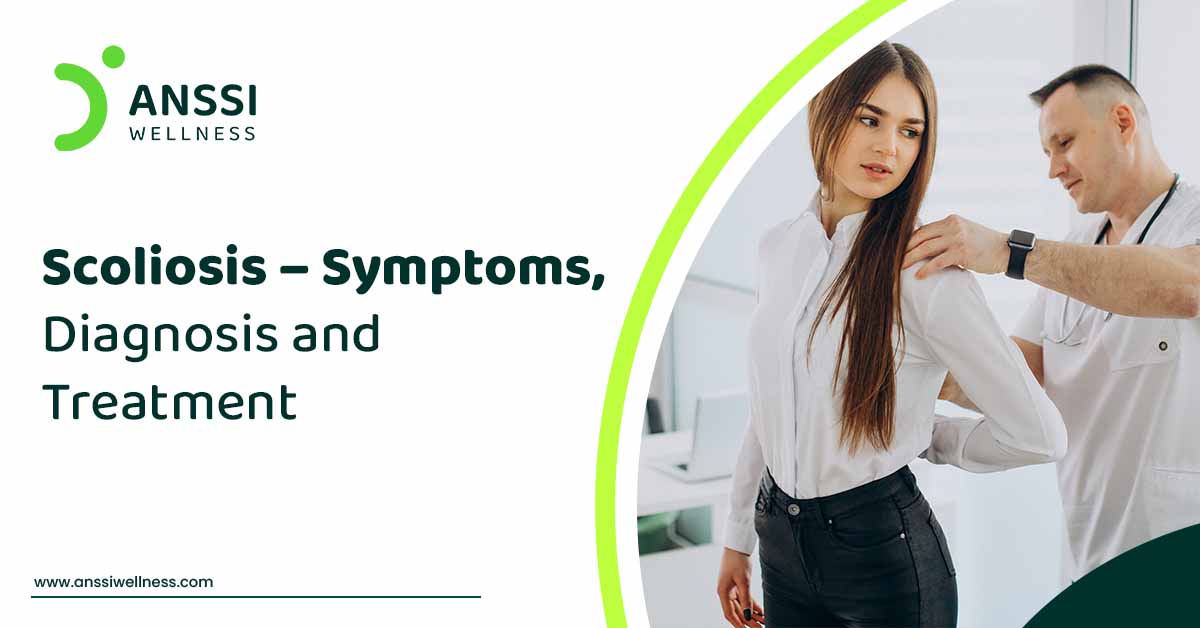
Most scoliosis cases can be detected through a physical exam. Doctors generally observe the back and look for any spine curvature or uneven shoulders/rib cage/waist while the patient stands still with the arms at the sides and then bends forward on the doctor’s instruction.

Imaging

Doctors may prescribe any of the following imaging tests to get a better overview of the spine:

  • X-Ray
  • MRI Scan
  • CT Scan
  • Bone Scan

A regular x-ray usually helps diagnose scoliosis and the severity of the curve in the spine.

What are the Treatment Options for Scoliosis?

As per the severity of the spinal curvature, the treatments for scoliosis differ. Mild curves in children typically don’t require any treatment, with regular monitoring necessary to check for potential worsening.

In cases where the curve is moderate or severe, the following factors are taken into consideration before deciding on treatment:

  • Bone Maturity: In children whose bones have stopped growing, there is a lesser risk of curve progression
  • Location of Curve: Experts believe thoracic curves have a higher probability of progression compared to curves in other spine regions
  • Sex: Girls have an elevated risk of curve progression compared to boys

After taking into account the above factors, the following treatment options are recommended by doctors:

  • Regular Observation & Monitoring
  • Bracing (Wearing a device around the torso that helps prevent worsening of the curve)
  • Surgery (Complications include bleeding, infection, nerve damage, etc.)

Conclusion

The majority of the cases of scoliosis are mild, with few signs & symptoms to be worried about. However, in severe cases, quick & proper treatment is essential to treat the condition and maintain the quality of life.

If anyone in your friends or family circle has been diagnosed with scoliosis and recommended surgery by a doctor, then make sure to consult the Spine Specialists at ANSSI Wellness Centre for Expert Guidance!

Call on the following number to book a consultation at your nearest ANSSI Wellness Centre: 9004726844

FAQs

Scoliosis causes a sideways curvature of the spine in a person. The curve resembles the shape of the letter C or S.

Most scoliosis cases are mild. Having said that, some curves in the spine may become severe with age.

Some types of scoliosis such as Mild Idiopathic Scoliosis doesn’t worsen with age. However, individuals with curves of over 50 degrees are considered to have worsening symptoms with a rise of 1-2 degrees in the curve every passing year.

Share

Spine Surgery Risks and Potential Complications

Are you experiencing back or neck pain due to a spine disorder? Has a doctor recommended spine surgery? Read this blog before you make a decision to become aware of the spine surgery risks and spine surgery potential complications that can arise during or after the operation.

What Are The 3 General Categories of Risk with Any Surgery?

There are a variety of risks linked with any kind of surgery, let alone spine surgery. Find below the 3 categories of risks commonly associated with spine surgery.

Risks of Anaesthesia

Almost all spine surgeries necessitate general anaesthesia. Even though all anaesthesia types have some risk involved in them, serious complications & side effects are usually not caused by anaesthesia. The risks also vary as per each individual’s health, type of anaesthesia used, and the body’s response to it. Generally speaking, the risks of anaesthesia include:

  • Sore throat
  • Throat swelling
  • Harsh voice
  • Allergic reaction to medications
  • Nausea & vomiting post-surgery
  • Damage to the teeth/lips
  • Changes in blood pressure
  • Changes in heart rate or rhythm
  • Complications from the breathing tube
  • Seizures
  • Stroke
  • Heart attack
  • Death – very low risk (1 out of 2 lakh patients)

Risks of Complications that can occur During the Surgery

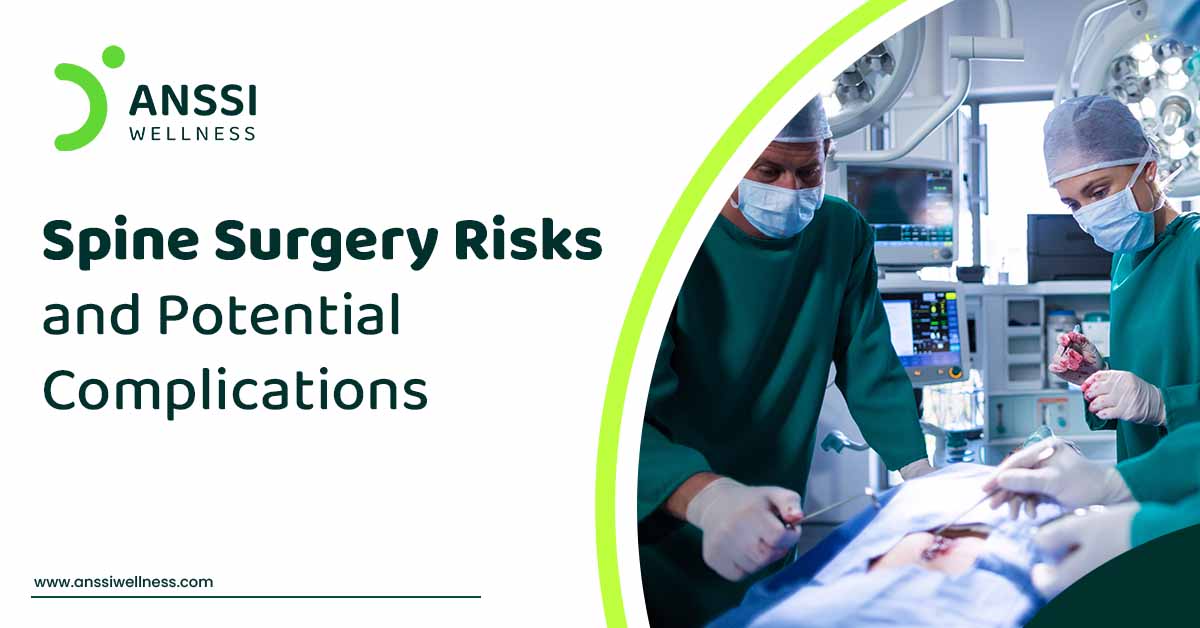
During spine surgery, there are a few risks of complications that one needs to be aware of. However, it’s important to note that these risks rarely materialise. The risks include:

  • Abnormal bleeding
  • Dural tear & spinal fluid leak
  • Injury to a nerve or spinal cord – low risk (1 out of 5 thousand patients)
  • Injury to anatomical structures near the spine

Risks of Complications that can occur After the Surgery

There are a wide array of risks of complications that can occur post spine surgery. Following are some of the well-known risks:

  • Persistent pain, numbness or weakness
  • Dural tear & spinal fluid leak
  • Infection in the wound
  • Blood clots in the legs (DVT)
  • Implant and fusion complications
  • Medical complications leading to stroke, heart attack, pneumonia or urinary infection

Potential Spine Surgery Complications

Let’s get to know some of the potential spine surgery complications in detail:

Bleeding

A little bit of bleeding during spine surgery is quite normal. Surgeons follow various practices to reduce and control bleeding as much as possible. Having said that, on rare occasions, major blood vessels can get damaged, causing continuous blood loss.

Dural Tear

A dural tear takes place when a part of the protective covering over the spinal cord gets torn, resulting in cerebrospinal fluid leaking out. In some cases, the surgeon is able to detect the tear during the operation and repairs it straightaway. The majority of the dural tears heal on their own, but in rare instances, they may not heal and cause a spinal headache.

Fusion Fails

In the case that a spinal fusion doesn’t heal as expected, the condition is termed a ‘nonunion’. A nonunion generally implies that there is motion between the 2 bones which should have been fused together. This undesirable motion can cause pain that might grow in severity over time.

Infection

Infection after spine surgery is relatively uncommon due to the preventive measures undertaken by surgeons/nurses in the form of antibiotics & sterile procedures to minimise the risk of infection.

Nevertheless, an infection might develop in the skin around the incision area and in rare circumstances, the infection may spread deep into the areas surrounding the spinal cord & vertebrae.

Nerve & Spinal Cord Damage

Modern-age surgical tools have decreased the risk of nerve and spinal cord damage in the form of bruises, cuts, etc. Having said that, the risk remains wherein the damage can occur and lead to pain, paralysis, sexual dysfunction and other sensory & functional symptoms.

How is Non-Surgical Spinal Decompression better than Surgery?

As the name suggests, the Non-Surgical Spinal Decompression is a 100% non-surgical treatment that is completely painless, requires no hospitalisation, medications, or injections, and has zero side effects!

Spinal Decompression is a USA patented technology and helps treat various conditions of back, spine and neck pain in just a few weeks’ time. Moreover, it’s highly affordable, provides lifelong relief and has so far helped avoid 3500+ surgeries from India and abroad!!

Conclusion

Taking into account the wide range of risks and potential complications associated with spine surgery, it’s vital to consider alternative treatment methods that can provide relief without such risks.

The Non-Surgical Spinal Decompression Treatment is one such treatment method that has proven to be highly successful, helping treat patients across India, South Africa, Iran, Sri Lanka, Maldives, Tanzania & Canada for spinal disorders without any surgery at ANSSI Wellness Centre.

Click here to book your appointment at your nearest ANSSI Wellness Centre: 9004726844

FAQs

There are several risks and potential complications associated with spinal surgery. This include risks of anaesthesia, bleeding, dural tear, fusion fails, nerve and spinal cord damage, etc.

Any kind of surgery can lead to complications, and the same is the case for spine surgery as well. The risks of spine surgery may vary depending on the spinal disorder you are suffering from.

In order to avoid the various different risks and potential complications linked with back surgery, it’s essential to look for alternative treatment methods.

Share

How to Relieve Back Pain Without Surgery: 5 Non-Surgical Ways To Treat Back Pain

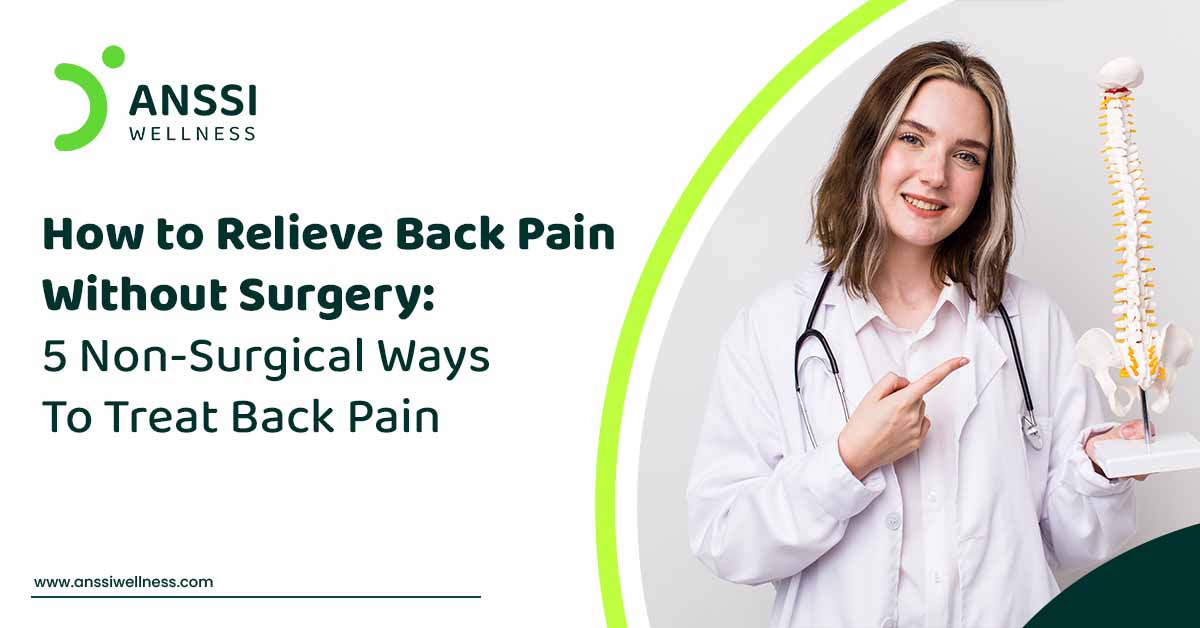
Back pain is a common issue faced by most people due to various different reasons. Research suggests that 8 out of 10 people have to go through some kind of back pain during their lifetime. However, chronic back pain caused by spinal disorders can be a major problem, making it difficult to perform everyday tasks and live a normal life.

In such cases, many doctors recommend surgery to patients, which can be very expensive, full of risks and accompanied by a number of side effects. Hence, it’s important to consider non-surgical ways of treatment to relieve back pain without surgery. Keeping that in mind, we have come up with this highly informative blog on the common causes of chronic back pain and 5 non-surgical ways of treatment. Let’s begin!

Common Causes of Chronic Back Pain

Most of the time, chronic back pain is caused by age-related issues, but it can also be a result of spinal disorders or injury. The common causes of chronic back pain are:

  • Spinal Arthritis
  • Spinal Stenosis
  • Disc Issues, like a herniated/bulging disc
  • Myofascial Pain Syndrome (unknown muscle pain & tenderness)

5 Non-Surgical Ways To Treat Back Pain

Back pain can be treated without surgery through the following 5 non-surgical ways of treatment:

Correcting Posture

In today’s hectic corporate culture, desk jobs have become a primary reason for incorrect posture resulting in back pain. Hours of continuous sitting in front of the computer with the wrong posture is a common cause of back pain.
In such a scenario, using wearable devices that pull shoulders back in a gentle manner and provide a reminder of incorrect posture is one way of non-surgical treatment for back pain.

Exercise

Chronic back pain generally leads to people abandoning all types of physical activities and taking bed rest. However, a lack of physical activity and exercise can worsen the existing condition.
Studies have shown that exercises which bolster the back muscles can help decrease chronic back pain. Particularly speaking, strength training exercises along with aerobic & flexibility exercises can help manage back pain in many patients.

Physiotherapy

Physiotherapy is a common non-surgical treatment availed by a large number of patients worldwide who are suffering from back pain. It comprises massages, heat therapy, doing particular exercises and stretches, etc., to restore movement & function and help alleviate back pain.

Injection-based Treatments

Various types of injection-based treatment procedures are available for chronic back pain. This includes nerve blocks, nerve ablations, epidural steroid injections, etc. These injections can decrease back pain for a specific time period but are not recommended as long-term treatment procedures due to their side effects.
The different side effects of these injections include mild soreness/pain in the injection area, headache, nausea, vomiting and in some cases, infection or bleeding.

Non-Surgical Spinal Decompression Therapy

The most effective, painless & technologically advanced non-surgical treatment for back pain is the Non-Surgical Spinal Decompression Therapy. Available for the 1st time in India through ANSSI, it’s a USA patented technology that has been proven to be very effective as per the USA Journal of Clinical Research.
It’s completely safe without any side effects or risks associated with surgery/anaesthesia. Additionally, it doesn’t require any medication or hospitalisation and has cured 2500+ people so far!

Conclusion

It’s important to note that 95% of neck, back & spine surgeries can be avoided with the help of alternative treatment methods. ANSSI through its Wellness Centre in Mulund, Mumbai is providing a proven & affordable non-surgical treatment for various spinal disorders that cause chronic back or neck pain:

  • Slipped Disc
  • Sciatica
  • Spondylosis
  • Disc Degeneration
  • Gap in Spine
Contact us to book a consultation at your nearest ANSSI Wellness Centre: 9004726844
FAQs

Yes, back pain can be cured without surgery with the help of alternative treatments like Non-Surgical Spinal
Decompression Therapy, Correcting Posture, Exercise, etc.

The most common treatment for developed countries is Spinal decompression Treatment which is available at more than
5000 centers However in India patients take a treatment based on pain level.

Share

Everything You Should Know About Non-Surgical Spinal Decompression

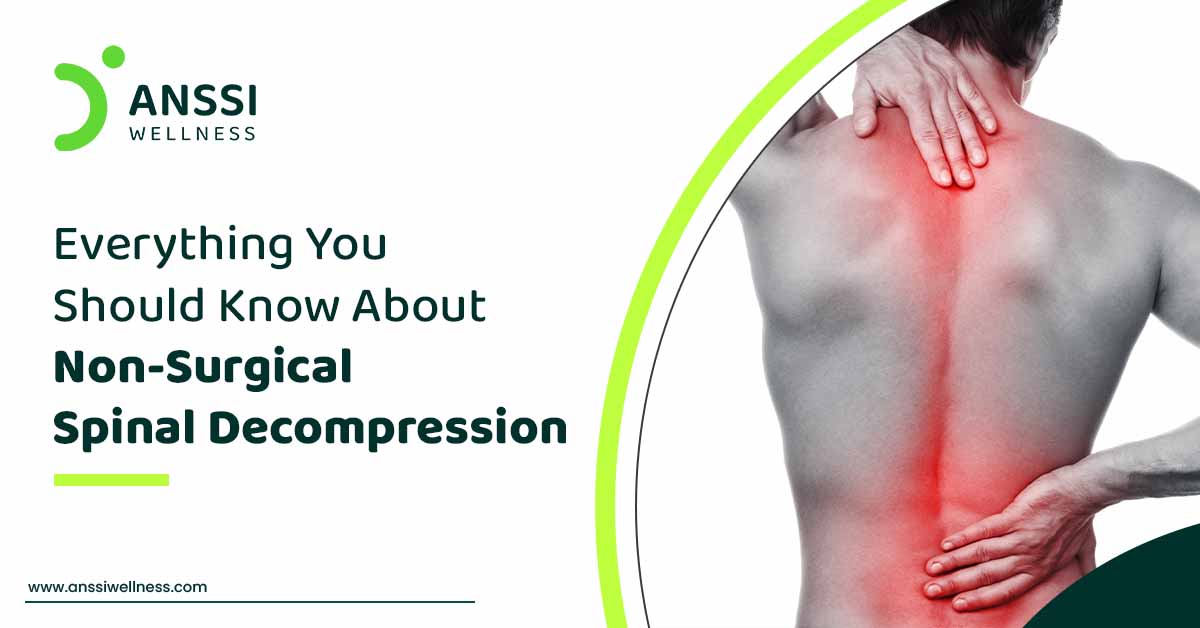
Non-surgical spinal decompression is a US patented treatment method/therapy which provides long-term relief from spine-related disorders. Non-surgical spinal decompression works by stretching the spine and attempting to reduce the stress on the joints.
The working principle behind this treatment is that by inducing traction via a computerised machine upon the lower back, spinal decompression assists in reducing pressure on the discs between the vertebrae.

How Is Non-Surgical Spinal Decompression Therapy Done?

The procedure of non-surgical spinal decompression therapy starts with a spine specialist fitting you with two harnesses, one around your pelvis and the second around your trunk. You will then be asked to lie face down or up on a table.
The spine specialist will operate the computer, customising the treatment as per the distinct requirements. The procedure may take around 30-45 minutes to conclude and 20-28 such sessions might be conducted over a period of 5-7 weeks. Before or after the procedure, you might be given other kinds of treatment, like:

  • Electrical stimulation (electric current which leads to specific muscles contracting)
  • Ultrasound (utilisation of sound waves for producing heat & facilitating healing)
  • Heat or cold therapy

How much does Spinal Decompression cost?

The cost of spinal decompression treatment may differ depending on the issue the person is facing. However, it’s much more affordable compared to the cost of spine surgery.

Is there evidence showing that this therapy is effective?

A number of research studies have been conducted to gauge the effectiveness of spinal decompression therapy. One notable research study found that out of the 219 patients who were part of the study, 92% of the patients experienced pain relief after completing the therapy.

What is the Success Rate Of Spinal Decompression Therapy?

Well-known medical literature has brought to light that more than 75% of patients who have undergone spinal decompression therapy have found it to be effective.
Most of these patients have experienced long-term pain relief and effective management of the pain after completing all the sessions. Broadly speaking, the success rate of spinal decompression therapy is around 71-89%.

How Successful is Non-Surgical Spinal Decompression?

Non-surgical spinal decompression has a success rate of more than 80% and provides lifelong relief. So far 2500+ patients from India and abroad who had been suffering from spinal disorders have successfully avoided surgery through this therapy.

Who Should Not Have Non-Surgical Spinal Decompression?

Although quite effective and proven, spinal decompression therapy isn’t recommended for pregnant women or people with the following conditions:

  • Fracture
  • Tumour
  • Abdominal aortic aneurysm
  • Advanced osteoporosis or degeneration of the spine
  • Grade 3 & 4 spondylolisthesis
  • Metal implants in the spine
  • Severe nerve damage
  • Metastatic cancer
  • Disc space infections

Consult a spine specialist if you are unsure whether this treatment is suitable for you or not.

Should you go for Surgical or Non-Surgical Spinal Decompression Therapy?

As mentioned above, it’s best to consult a spine expert regarding your spinal disorder, the symptoms you are experiencing and your scan reports.
However, as a rule of thumb, it’s always better to undergo a non-surgical procedure as it involves much fewer risks compared to surgery.
Following are the Risks linked with Spinal Decompression Surgery:

  • Infection
  • Bleeding
  • Blood clots
  • Allergic reaction to anaesthesia
  • Nerve or tissue damage
  • It may not provide significant pain relief

Benefits of Non-Surgical Spinal Decompression:

  • 100% Non-Surgical Treatment
  • Proven & Patented Spinal Decompression Technology Since 1994
  • Very Effective as per USA Journal Clinical Research
  • Completely Painless
  • Safe without any Risks associated with Surgery or Anaesthesia
  • Zero Side Effects
  • No Medication & Hospitalization
  • Affordable

FAQs

1) Does non-surgical spinal decompression hurt?
No, non-surgical spinal decompression is a completely painless procedure.

2) How successful is non-surgical spinal decompression?
Non-surgical spinal decompression has a greater than 80% success rate.

Conclusion

If you are experiencing chronic neck or back pain, then get in touch with the Spine Specialists at ANSSI for a Consultation. Get lifelong pain relief without surgery in just a few weeks! Book your Appointment now:

Share
Share
Open chat
1
Book Appointment Here
Scan the code
Hello
Can we help you?
Call Now Button
WhatsApp